 SmartScroll
The headline finding: a 2025 review published in Psychological Bulletin, covering 71 studies and nearly 100,000 participants, found heavy short-form video use associated with poorer attention and impulse control and with increased symptoms of depression, anxiety, stress and loneliness. Doomscrolling has moved from a pandemic buzzword to a measured public-health topic.
The key statistics at a glance
| Statistic | Finding | Source |
|---|---|---|
| 71 studies, ~100,000 participants | Heavy short-form video use linked to poorer cognition (especially attention and impulse control) and higher depression, anxiety, stress and loneliness | Psychological Bulletin review, 2025 (via NBC News) |
| 6.5 hours per day | Average time young people now spend online, reported alongside the review | Same review coverage, NBC News |
| Brain differences in heavy users | Higher short-video addiction symptoms linked to lower loss aversion and slower evidence accumulation in decision-making | NeuroImage study (via PsyPost) |
| "Brain rot", word of the year | Oxford University Press named it 2024 word of the year: "the supposed deterioration of a person's mental or intellectual state" from consuming trivial online content | CNN |
| APA study coverage, Nov 2025 | American Psychological Association research connected TikTok-style scrolling with brain rot symptoms | Euronews |
| Friction works (with limits) | The pre-open pause approach (one sec) is validated by peer-reviewed studies with the Max Planck Institute for reducing impulsive app opens | one sec |
The arithmetic nobody runs: hours into years
Statistics about "daily average minutes" bounce off. Convert them to a lifetime and they stop bouncing:
- 2 hours of scrolling per day is about 30 days per year. One month, every year, spent inside feeds.
- Over a 60-year adult span, that same 2 hours per day adds up to roughly 5 years of waking life. Three hours per day is closer to 7.5 years.
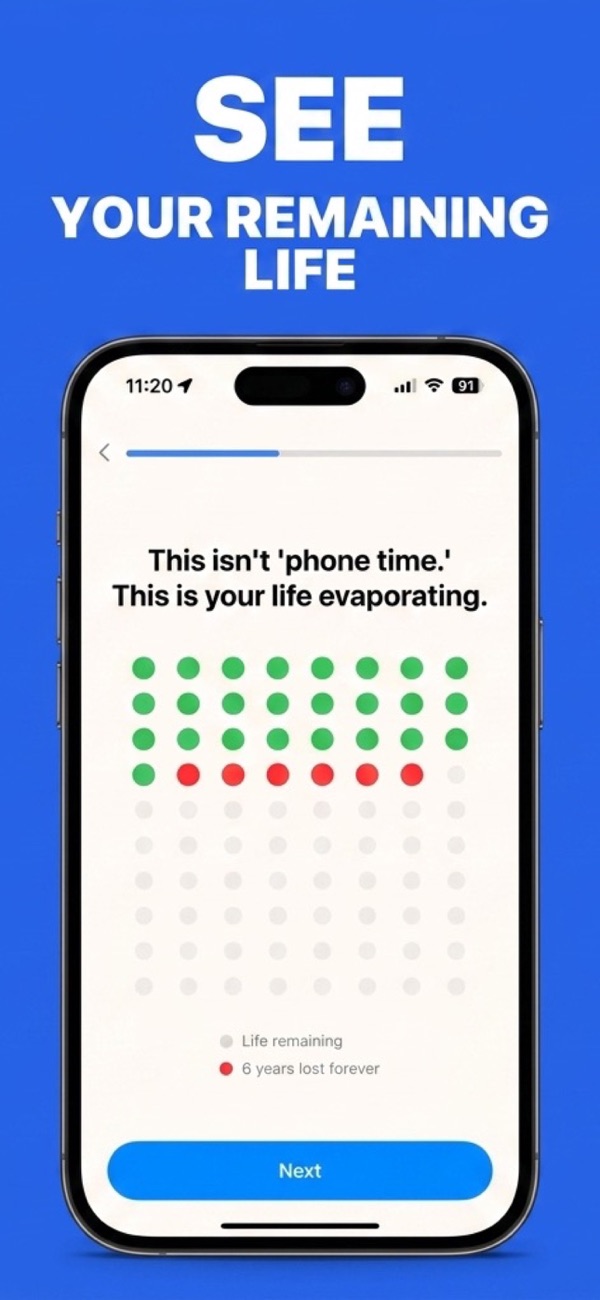
- This is the calculation behind SmartScroll's Life Grid, which displays your remaining life as a grid of dots and marks the years your current scrolling habit will consume. Users consistently report this single screen as the moment the habit stopped feeling free.
What the statistics mean in practice
Three practical conclusions follow from the data:
- The problem is concentrated. The harms cluster around short-form, algorithmically fed video: TikTok, Reels, Shorts. Most other phone use does not show the same pattern, so blanket digital detoxes overshoot. Target the feeds; see our screen time reduction plan.
- Willpower-based fixes underperform. The mechanism is a variable-reward loop, the same one used by slot machines. Loops respond to environmental change: limits, interruption and replacement, not resolutions. The mechanics are covered in what is doomscrolling.
- The effects appear reversible. The attention and mood findings are associations with ongoing heavy use. People who cut the feeds consistently report the fog lifting within weeks; the practical protocol is in our brain rot detox guide.
Citing this page: the compiled statistics are free to reference with a link to this page. The underlying findings belong to their original researchers and publishers, linked in the table above. Figures were compiled in July 2026.
Turn your own numbers around
See your scrolling measured in life, then take it back.