 SmartScroll
Doomscrolling means compulsively scrolling through feeds long past the point of enjoyment or usefulness, usually while feeling progressively worse. The word appeared during the 2020 pandemic, when people spent hours scrolling bad news they couldn't look away from. Today it covers something broader: any autopilot scrolling session on TikTok, Instagram Reels, YouTube Shorts or X, where you opened the app without deciding to and can't seem to stop.
The psychology: why your brain can't stop
Doomscrolling is not a willpower failure. It is a designed behavior, built on three mechanisms:
- Variable rewards. Most posts are forgettable, but occasionally one is hilarious, shocking or fascinating. Your brain learns the payoff is always one swipe away. This is the same reward schedule that makes slot machines compelling.
- Infinite scroll and autoplay. There is no natural stopping point. The next video starts before you decide to watch it, so continuing is the default and stopping requires an active choice.
- Negativity bias. Human attention locks onto threats. Alarming content holds you longer, the algorithm notices, and the feed serves more of it. That is the "doom" part.
Put together, every session is a loop: cue (boredom, stress, bedtime), behavior (scroll), variable reward (occasional great post), repeat. Loops like this do not respond to resolutions. They respond to environmental change.
What doomscrolling does to you
The research picture has sharpened in the last two years. A 2025 review in Psychological Bulletin, covering 71 studies and nearly 100,000 participants, linked heavy short-form video use to poorer attention and impulse control, plus increased symptoms of depression, anxiety, stress and loneliness. Users describe the subjective side as brain rot: mental fog, a shot attention span, and feeling drained after sessions that were supposed to be relaxing. The sleep cost compounds everything else, since most doomscrolling happens in bed. For the numbers, see our doomscrolling statistics roundup.
Is doomscrolling an addiction?
Not formally. There is no clinical diagnosis for scrolling or short-form video addiction, and some neuroscientists caution against the label. But the distinction matters less than it sounds: doomscrolling behaves like a habit loop with an addictive reward schedule, which means the fixes that work on habit loops work on it. You do not need a diagnosis to change a loop.
How to stop doomscrolling
Three moves, in order of leverage:
- Set real limits on the feed apps. Decide once, while calm, how much TikTok or Reels you actually want per day. Enforce it with an app, not a mental note.
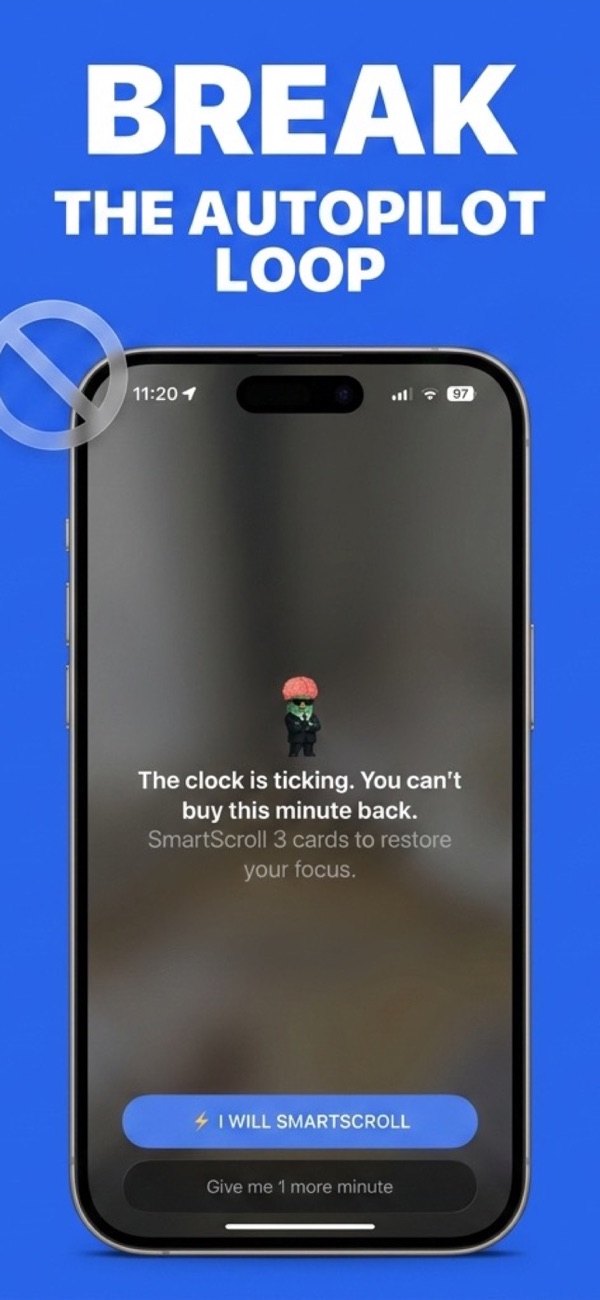
- Interrupt the loop at the craving. The decisive moment is mid-session, when your limit hits and your brain wants one more video. A dismissible reminder loses that moment; a genuine interruption wins it.
- Replace the reflex instead of fighting it. The swiping urge outlives any resolution. Give it somewhere to go.
This is exactly what SmartScroll automates on iPhone. You pick the apps and set limits and schedules. When a limit is reached, SmartScroll interrupts the loop and offers bite-sized knowledge cards instead of the feed: the same swipe, pointed at something you'll remember. The Life Grid then shows what the habit costs in years of your remaining life, which is the kind of number that actually changes behavior. For the full playbook, read how to stop doomscrolling.
One-line summary: doomscrolling is a designed habit loop, not a character flaw. Change the design (limits, interruption, replacement) and the loop breaks in about a week.
Break the loop this week
Download SmartScroll and set your first limit in two minutes.