 SmartScroll
The short answer: brain rot, the drained, foggy, can't-focus feeling after heavy short-form video use, fades when you cut the dopamine-loop feeds and retrain your attention on slower rewards. You don't need to go offline. You need to (1) cap the junk feeds, (2) redirect the scrolling reflex into something nourishing, and (3) rebuild your tolerance for long-form attention. SmartScroll is built around exactly that swap.
Is brain rot real? What the research says
"Brain rot" started as Gen Z slang and became Oxford's 2024 word of the year. The science behind the joke is getting serious: a 2025 review published in Psychological Bulletin, covering 71 studies and nearly 100,000 participants, found heavy short-form video consumption associated with poorer attention and impulse control and increased symptoms of depression, anxiety, stress and loneliness. Neuroimaging work has linked short-video addiction symptoms to slower evidence accumulation in decision-making and reduced sensitivity to losses.
Fair caveat: "short-form video addiction" is not a formal clinical diagnosis, and some neuroscientists urge calm. But you don't need a diagnosis to recognize the pattern: you can feel it every time you surface from a 45-minute Shorts session dumber and more anxious than you went in.
Why the feeds cause the fog
Short-form feeds train your brain on a 2-to-30-second reward cycle: swipe, hit, swipe, hit. Books, lectures, work and conversation pay out on cycles of minutes to hours. Spend three hours a day on the fast cycle and the slow cycle starts to feel unbearable, not because your brain is damaged, but because it's been calibrated to the wrong tempo. The detox is recalibration.
The detox: swap the feed, don't flee the phone
- Cap the junk feeds. In SmartScroll, set daily limits on TikTok, Reels, Shorts and X. Start at half your current usage: aggressive enough to matter, realistic enough to survive week one.
- Redirect the reflex into knowledge cards. This is the step most detoxes miss. The swiping reflex persists for weeks: fight it and you'll relapse. SmartScroll's knowledge cards accept the swipe and pay it with bite-sized facts and insights: same gesture, but the reward cycle carries actual content your brain retains. Junk feed out, learning feed in.
- Reintroduce long-form on purpose. One podcast episode, one article, twenty pages of a book: daily. Expect it to feel slow at first; that's the recalibration working.
- Protect your sleep window. Late-night scrolling is where brain rot compounds, because sleep loss degrades the same attention systems. Set a night schedule so the feeds are off during wind-down.
- Watch the fog lift on the Life Grid. SmartScroll's Life Grid shows the hours you're reclaiming as dots of life instead of red dots lost forever. It turns an invisible recovery into a visible score.
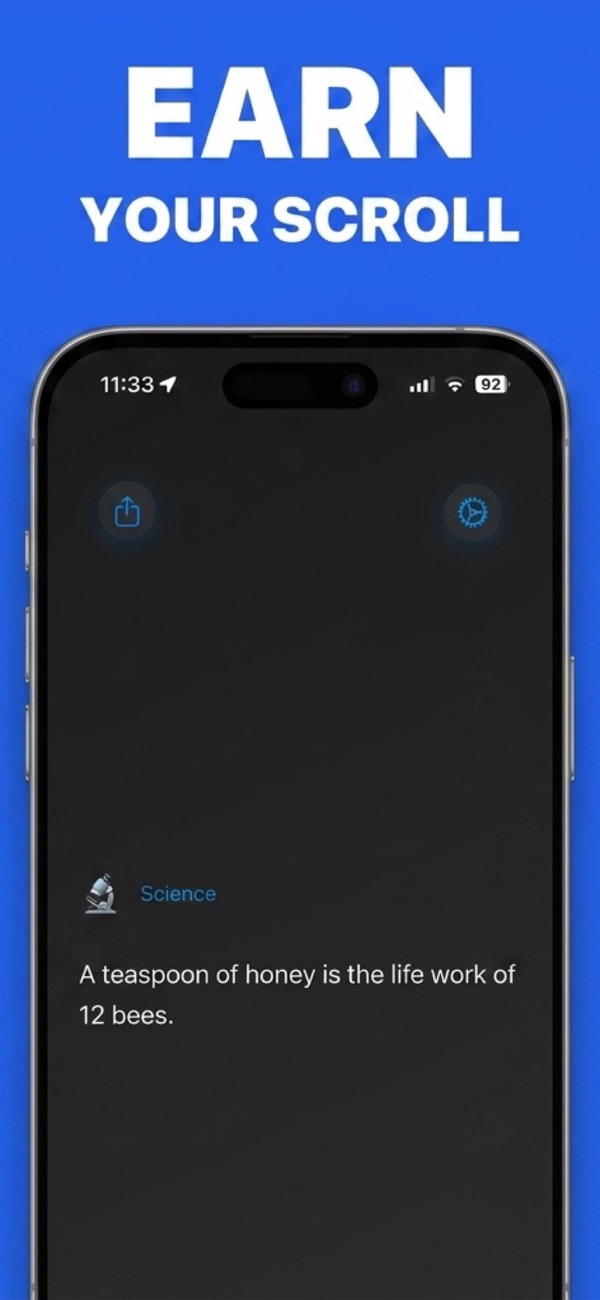
Why "swap" beats "quit": going cold turkey on all feeds fails for the same reason crash diets do; the craving outlives the resolve. Giving the scrolling reflex a healthy outlet is the difference between white-knuckling and actually rewiring. It's the core idea behind SmartScroll: earn your scroll.
The recovery timeline
- Days 1–3: restlessness and phantom reaching for the feeds. The interruptions do the resisting for you.
- Week 1: the post-scroll fog stops recurring because the marathon sessions stop happening.
- Weeks 2–3: long-form starts feeling normal again, you finish videos, chapters, conversations.
- Week 4+: attention span measurably recovers; the feeds start feeling too fast, which is how you know the recalibration took.
Start your detox with a better feed
Download SmartScroll: cap the junk, keep the scroll, feed your brain.