 SmartScroll
The short answer: a social media detox works when it targets the feeds, not the accounts. You don't need to announce a departure, delete apps, or go monk mode. You need seven days of capped, interrupted, replaced feed time, so that by day 8 the autopilot loop is broken and social media has shrunk back to what you actually use it for: messages, friends, and the occasional post.
Why the classic detox fails on day 8
The delete-everything detox has a structural flaw: it pauses the habit instead of retraining it. Your scrolling reflex sits untouched for a week while you white-knuckle the absence, and the moment the apps return, the reflex picks up exactly where it left off, often with a rebound binge that erases the week. The same failure pattern shows up with dopamine detoxes and deleting TikTok: absence doesn't retrain anything. Replacement does.
The 7-day plan
Day 0: setup (20 minutes, the only hard part)
- Measure your baseline. Settings → Screen Time. Write down your daily average and your top three apps. You'll want this number on day 7.
- Cap the feeds in SmartScroll. Add TikTok, Instagram, YouTube, X. Set daily limits at half your current usage, and add a schedule blocking the first 30 minutes of your morning and the hour before bed.
- Clean the triggers. Feed apps off the home screen, all non-human notifications off.
Days 1 to 3: let the interruptions absorb the reflex
You'll reach for the feeds constantly, that's expected. Each time a limit hits, SmartScroll interrupts the loop and offers knowledge cards instead: the swipe still lands, but on something with actual content. Don't fight the reaching; let the redirect do its job. Expect days 1 and 2 to feel twitchy and day 3 to feel noticeably quieter.
Days 4 to 5: fill the space on purpose
By midweek you've reclaimed 60 to 90 minutes a day, and empty reclaimed time is relapse fuel. Assign it: the book, the gym session, the friend you keep meaning to call. One planned replacement per reclaimed window.
Days 6 to 7: check the score and set the keeper limits
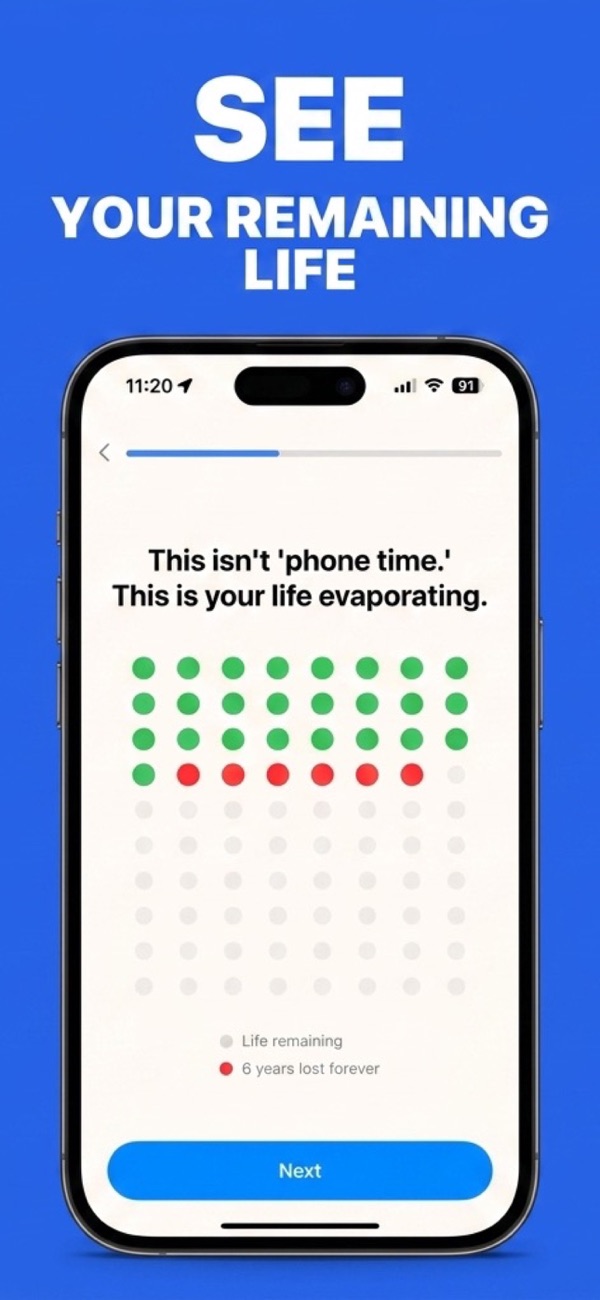
Compare your Screen Time average to day 0, and look at the Life Grid: the hours you cut, displayed as years of life kept rather than lost. Then set your permanent limits, usually somewhere between the detox cap and your old baseline. That number, not zero, is the sustainable end state.
The rule that makes it sustainable: messages and DMs stay unlimited the whole week. A detox that cuts you off from actual friends gets abandoned, and deserves to be. The target is the feed, never the people.
What changes after the week
The reliable reports after seven feed-capped days: sessions stop starting on their own, the post-scroll fog fades, and the feeds start feeling oddly fast, which is the sign your reward cycle is recalibrating (the mechanism is covered in the brain rot guide). Keep the limits and the night schedule, and the detox quietly becomes the default. For the longer version of this arc, see the 30-day phone addiction plan.
Start day 0 tonight
Download SmartScroll, cap your feeds, and let the week run itself.