 SmartScroll
The short answer: "phone addiction" is almost never addiction to the phone. It is two or three specific app loops, usually short-form feeds, running on autopilot. Break those loops with limits, interruption and a replacement behavior, and the rest of your phone use (maps, messages, music, banking) turns out to be fine. Here is the 30-day version.
First, diagnose: is it really the whole phone?
Open Settings → Screen Time and look at two numbers: your top three apps and your daily pickups. For most people the pattern is identical: pickups in the 60 to 100 range, and two or three feed apps eating 60 percent of total time. That is not "phone addiction." That is a doomscrolling loop wearing your whole phone as a disguise. The distinction matters, because plans that treat the whole phone (grayscale everything, dumb phone, weekend detox) punish the useful 40 percent and get abandoned within weeks.
Days 1 to 3: set the architecture
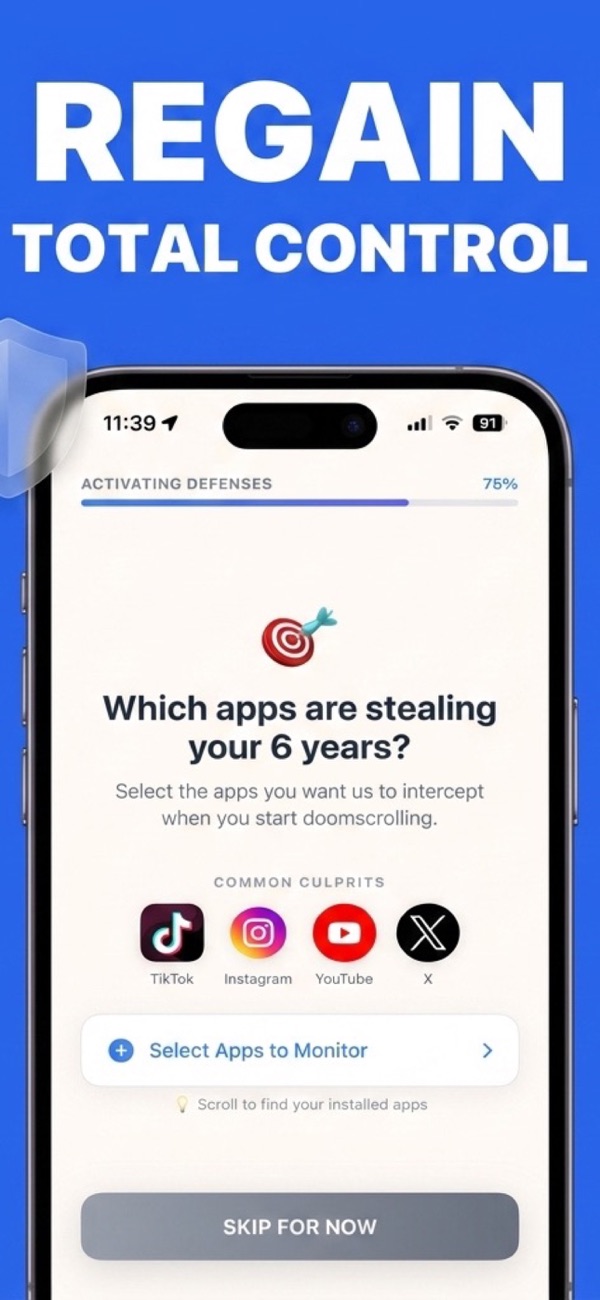
- Install limits on the loop apps only. In SmartScroll, add TikTok, Instagram, YouTube, X, whatever your Screen Time report indicts. Set daily limits at roughly half your current usage, plus schedules protecting your worst windows (first 30 minutes awake, last hour before bed).
- Clean the home screen. Move feed apps off the first page. Kill every notification that isn't a human being contacting you directly.
- Charge the phone outside arm's reach at night. A real alarm clock costs less than the sleep you're losing. Night scrolling is the keystone habit; see the night guide.
Days 4 to 14: let the interruptions do the work
This is the stretch where willpower plans die, because the reaching reflex is still alive: you will open blocked apps without deciding to, hit your limits, and crave one more video. The plan survives because you are not the one saying no. When a limit is reached, SmartScroll interrupts the loop and offers bite-sized knowledge cards instead of the feed. The urge to swipe gets an outlet, which is the difference between this and every wall-style blocker you've already out-clicked.
Expect the interruptions to fire constantly in week one and taper in week two. Each one is a 30-minute autopilot session that didn't happen. Do not tighten the limits yet; survive them first.
Days 15 to 30: rebuild what the loops displaced
Phone addiction isn't just time lost; it's the slow atrophy of everything that pays off on a longer cycle. Weeks three and four are for reversing that:
- Reintroduce long-form attention daily. Twenty pages of a book, one full podcast episode, one long video watched to the end. It will feel slow at first. That's the recalibration, covered in depth in the brain rot guide.
- Fill the reclaimed windows on purpose. The hour that used to vanish into Reels doesn't fill itself with virtue automatically. Decide what it's for before the phone decides for you.
- Tighten the limits once. Mid-month, cut your feed limits by another third. It will barely hurt; the reflex is already weaker.
Keep score in years, not minutes
The reason most people relapse is that progress is invisible: nobody feels "47 fewer minutes." SmartScroll's Life Grid makes it visible by converting screen time into the currency your brain actually values: years of remaining life. Two hours of daily scrolling is roughly five years over an adult lifetime (the arithmetic is here). Watching those dots move from red to green is what keeps the new baseline in place after day 30.
Is phone addiction a real addiction? There is no formal clinical diagnosis, and researchers debate the label. Practically, it behaves like a strong habit loop with a slot-machine reward schedule, which is good news: habit loops are fixable in weeks, without therapy or a dumb phone.
Start day one now
The whole setup takes two minutes.