 SmartScroll
The short answer: you check your phone in the morning because it's the alarm, it's within reach, and your barely-awake brain has zero resistance to a feed engineered for exactly that state. The fix is structural, not motivational: move the phone out of reach, schedule the feeds blocked until your morning is underway, and give the reaching reflex something else to land on. Set up once, and the habit dies within a week.
Why the morning check is the worst one
- You're at peak suggestibility. In the groggy minutes after waking, executive control is still booting. The feed meets no resistance, which is why "just five minutes" reliably becomes forty.
- It sets the day's dopamine baseline. Open with 30 minutes of rapid-fire novelty and everything after, work, breakfast, conversation, feels slow by comparison. The mechanics are the same reward-cycle mismatch behind brain rot.
- It's the keystone. People who scroll at wake-up scroll more all day: the morning session primes the reflex. Kill the first check and the daily total usually drops by more than the morning session itself.
The three-part fix
1. Break the alarm-to-feed pipeline
If your phone wakes you up, the feed is one thumb-slide from your face. Charge the phone across the room, or better, outside the bedroom, and use a cheap alarm clock. This single change forces you vertical before the first scroll is even possible, and standing-up you is measurably harder to hook than lying-down you.
2. Schedule the feeds blocked until your morning is done
In SmartScroll, add your morning culprits (Instagram, TikTok, X, YouTube) and set a schedule covering wake-up until you're genuinely started, say 7:00 to 9:00. The decision to not scroll gets made once, the night before, by the version of you that isn't groggy. When your thumb reaches anyway, the interruption catches it: the loop breaks before the first video loads.
3. Give the reflex a landing spot
The reach will keep happening for a week or two, so point it somewhere: the knowledge cards SmartScroll offers at the block are a two-minute scroll that ends on its own, or go analog with the classic replacements, water, daylight, the actual morning routine. What matters is that the hand finds something, because an empty reach goes looking for the feed in the browser.
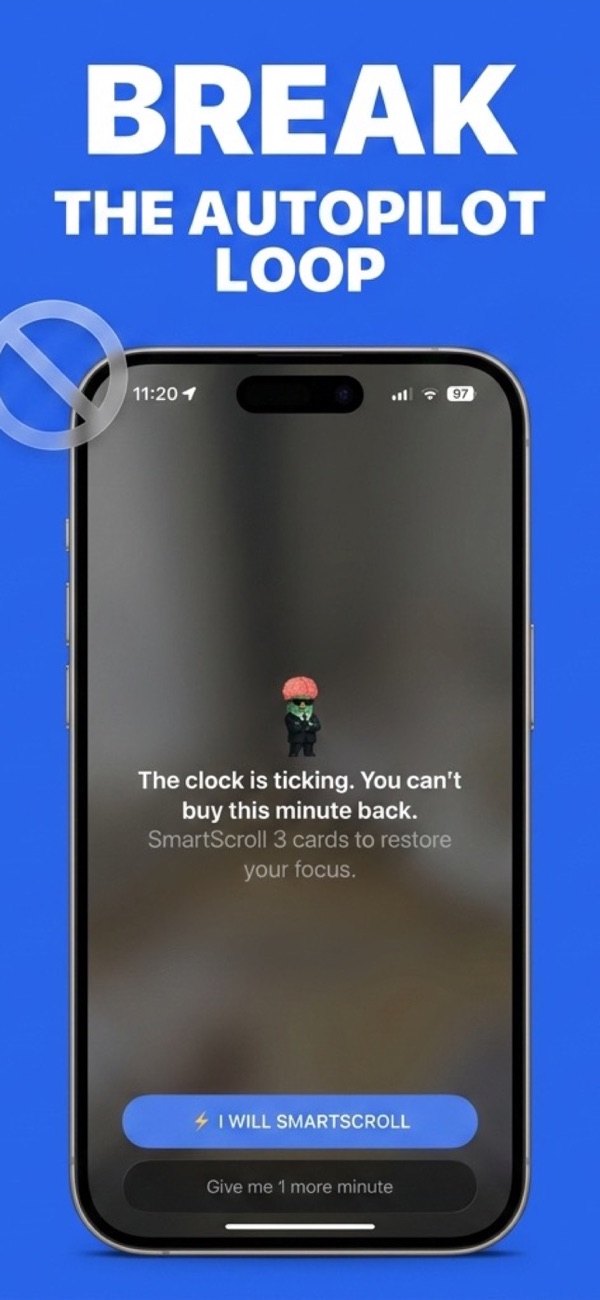
The "but my alarm/messages" objection: schedules in SmartScroll only cover the feed apps you pick. Alarm, Messages, weather, calendar and music stay fully available. The block is on the loop, not the phone.
What a protected morning changes
The first two mornings feel strange: you'll reach, hit the interruption, and briefly not know what to do with your hands. By day 3 or 4 the reach fades. What people consistently report after a week: mornings run 20 to 40 minutes shorter, the pre-work anxiety spike (which was never yours, it was the feed's) is gone, and evenings improve too, because the day's dopamine baseline never got cranked at 7 a.m. Pair it with the protected night window and you've fenced the two hours where doomscrolling does its worst damage.
Win the first hour back
Download SmartScroll and set your morning schedule tonight.